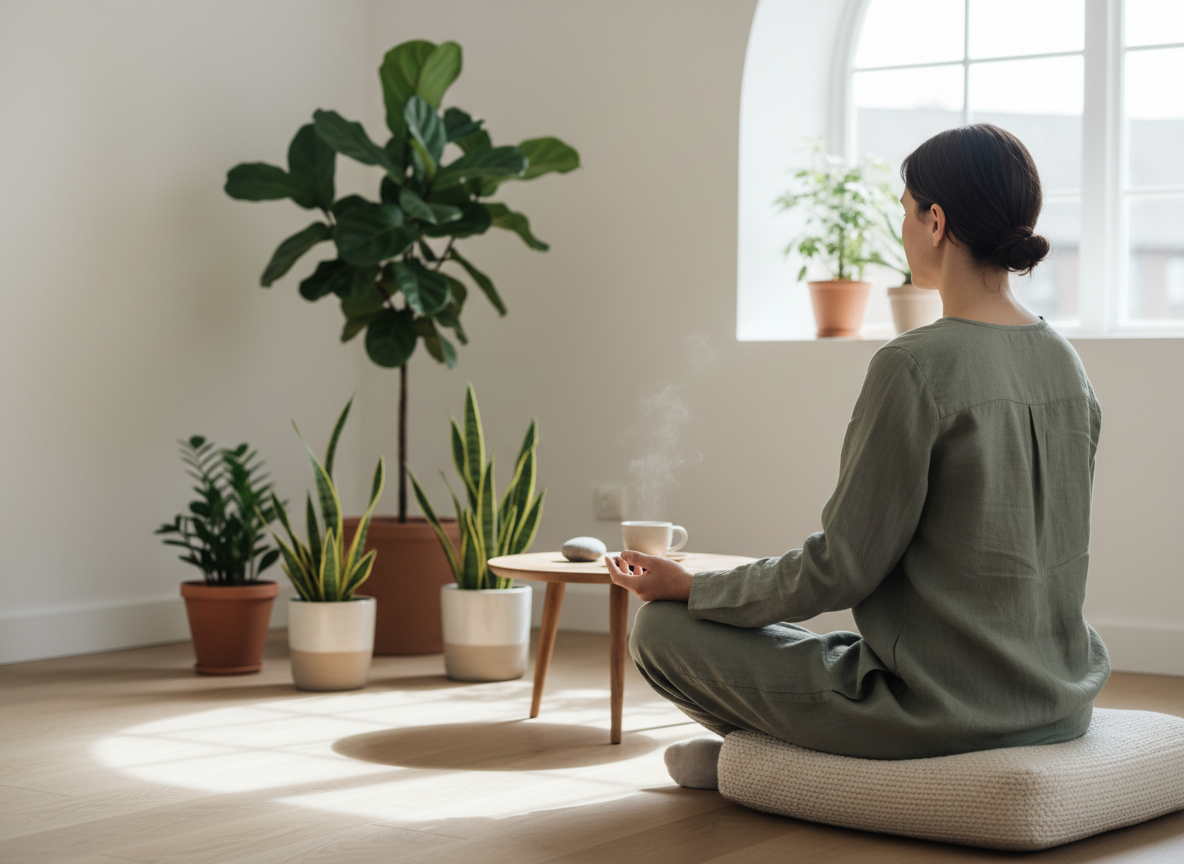
A whole-person perspective
Health Is Connected
Nutrition, movement, mind, faith, relationships, and the everyday choices we make are all connected — none stands alone. This page offers a gentle, whole-person way to care for your health, one small step at a time.
Start here — explore the topics below and choose the one that speaks to you today.
Explore the Topics
Jump to any section that speaks to you today. Each one offers gentle, practical ideas drawn from long-lived communities, cancer-prevention educators, and whole-person wellness, plus a simple reflection or challenge to help you choose one next step.
01 — Nutrition
Food as a Foundation
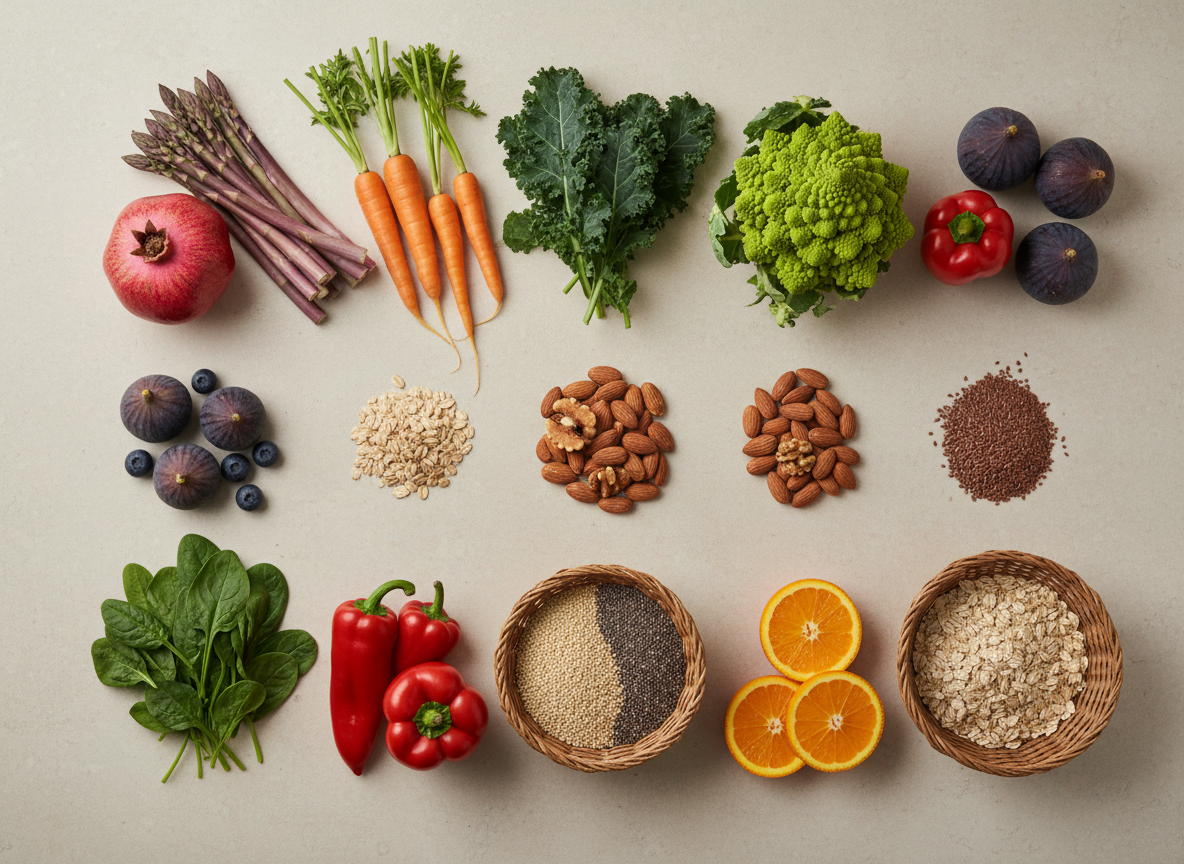
What we eat quietly shapes our energy, mood, digestion, and how our bodies feel day to day, and it also influences how well our bodies can repair and restore over the long term. Across long-lived communities and prevention-focused educators, a shared pattern emerges: most of the plate most of the time is made up of whole, minimally processed foods, often centered on plants — vegetables, fruits, beans, lentils, whole grains, nuts, seeds, herbs, and healthy fats, with thoughtfully chosen animal foods as desired. This doesn’t mean you never enjoy other foods; it means your daily default gently leans toward foods that grew, swam, or roamed recently, and away from ultra-processed products high in added sugars, refined flours, and artificial additives that tend to displace fiber- and nutrient-rich options.
You don’t need a perfect diet or a rigid plan to support whole-body health. Small shifts add up: drinking more water, adding an extra serving of vegetables or beans, choosing whole grains more often, swapping one processed snack for a handful of nuts or fruit, or cooking at home a bit more frequently. Eating slowly, noticing fullness cues, and sharing meals with others can support better digestion, more stable energy, and greater joy around food. Everyone’s needs differ, and some people have medical conditions or treatments that require specific advice — so use your body’s feedback, your preferences, and your health team’s guidance to shape your plate within a calm, sustainable framework.
Reflection: What is one simple, plant-forward or whole-food change you could experiment with at your very next meal?
02 — Exercise
Movement You’ll Return To
Bodies are built to move, and movement supports far more than muscles — it steadies mood, sleep, and the mind, and helps many other lifestyle pieces work together more smoothly. In long-lived populations, regular, natural activity is usually woven into daily life: walking, gardening, climbing stairs, doing housework, playing with kids, tending a yard. Planned exercise, like strength training, stretching, or classes, can add structure and protect mobility over time, but it doesn’t have to be intense or punishing to be helpful; what matters most is that it feels realistic and repeatable in the context of your whole life.
Consistency beats intensity, especially when movement is viewed as one strand of a broader whole-body framework rather than a stand-alone task. A short daily walk you enjoy will outlast a routine you dread, and gentle, regular movement can also support resilience during difficult seasons. Moving in ways that feel good can ease stress, lift mood, and often nudge other habits — like sleep, food choices, and social connection — in a more supportive direction. Honor your limits and current health status, and always check with a qualified professional if you’re unsure what’s safe for you. Let movement become something you get to do, even in small doses, rather than something you “should” do perfectly.
Reflection: What is one realistic way you could add a few more minutes of natural movement into your day — such as a short walk, stretch, or active break you’re actually willing to repeat?


03 — Mind Health
Tending the Inner World
Mental and physical health are deeply intertwined; stress, rest, and the stories we tell ourselves all leave a mark on the body. Communities with long, healthy lives often share daily rhythms that naturally lower stress — time outdoors, unhurried meals, spiritual practices, and social connection — and many prevention-focused educators emphasize managing stress as a core part of caring for the whole person. Cultivating realistic hope, practicing acceptance, and staying engaged as an active participant in your own care, alongside medical support, can help you navigate uncertainty with a steadier nervous system and a kinder inner voice.
Small practices help bring the mind and body back into balance: a few slow breaths, a brief walk outside, journaling, honest conversation, protecting your sleep, pausing from constant news or social media, and letting yourself rest without guilt. Mind health may also mean getting professional support for anxiety, depression, trauma, or other concerns; asking for help is a sign of wisdom, not failure, and fits squarely within a whole-body approach. If you are under the care of a therapist, counselor, or physician, these suggestions are meant to complement their guidance, not replace it.
Reflection: What is one small, calming practice you could build into your day this week to care for your inner world?
04 — Faith & Meaning
A Sense of Meaning
For many people, faith, spirituality, or a deep sense of purpose is a quiet anchor that shapes how they move through every other area of health. Research on long-lived communities often notes that people belong to faith communities or have regular spiritual practices, and many report that this connection gives them perspective in hard seasons, a reason to keep going, and a reminder that they are part of something larger than themselves. Stories of resilience in the face of illness or hardship similarly highlight hope, prayer or meditation, and a sense of mission as sources of strength — not as cures, but as companions that influence daily choices around food, movement, relationships, and rest.
Whatever faith or worldview looks like for you, tending it can bring peace, community, and resilience that ripple out into your habits and relationships. This might mean prayer, meditation, worship, time in nature, reading sacred texts, serving others, or simply setting aside quiet moments to remember what matters most. These practices can sit alongside medical care, not in place of it, and can help orient your decisions about what you eat, how you move, who you spend time with, and what you release. Make room for the beliefs and connections that ground you — they are part of your whole-person health, too.
Reflection: What is one small way you could reconnect with a sense of meaning or faith in the next few days?

05 — Forgiveness
Setting Down the Weight
Carrying resentment is heavy work, and it can color how you care for yourself in every other area. Forgiveness doesn’t mean excusing what happened, reconciling with someone who isn’t safe, or pretending it didn’t hurt — it means gradually loosening the grip that anger and bitterness hold on you, for your own sake. Many people describe forgiveness as a health practice for the heart and mind, one that frees up energy otherwise spent reliving old wounds and can open more space for rest, connection, and compassionate choices around food, movement, and relationships, even though it doesn’t erase the past.
It’s a process, not a single moment, and it often unfolds slowly, sometimes with the support of a trusted friend, community, or therapist. Being gentle with yourself matters; you are allowed to take your time, set boundaries, and seek help. Letting go — of old grievances and of the impossible standard of perfection in any health habit — can open more room for peace, connection, and the life in front of you. Whole-body health includes the condition of your inner world, and releasing what you can, when you are ready, is one way of caring for it.
Reflection: Is there one small step toward forgiveness you feel ready to explore — perhaps a journal entry, a prayer, a conversation with a safe person, or simply naming what still feels tender?

06 — Relationships & Community
The People Around You
One of the most consistent findings across research on long-lived communities is that the people around us matter deeply, and this holds true across many prevention-focused perspectives. Whether through close family, trusted friendships, faith groups, or neighborhood ties, belonging to a caring community provides a quiet but powerful form of nourishment. Connection gives us perspective, accountability, shared joy, and the grounding reminder that we are not alone. Loneliness and chronic social stress have measurable effects on sleep, energy, and overall resilience — which means investing in relationships is genuinely an act of whole-body care, not just a social nicety. Supportive people encourage our better habits, lift us on hard days, and remind us of our worth, often making it easier to follow through on changes in food, movement, and other daily choices.
It is equally important to recognize when certain relationships consistently drain rather than restore you. Chronic stress within relationships — whether marked by manipulation, relentless criticism, or a loss of safety — carries real costs for your wellbeing over time and can undermine your efforts in other health areas. Healthy boundaries are not walls; they are honest, compassionate lines that protect your energy and self-respect while still leaving room for genuine connection. Building community takes intention: saying yes to small gatherings, reaching out first, joining groups around shared interests or values, and showing up consistently for the people who matter. If isolation feels like a pattern, a counselor or community group can be a gentle, practical starting point.
Reflection: Think of one relationship or community connection that genuinely lifts you up. What is one small way you could invest in it this week?
07 — Everyday Chemicals
Reducing What You Don’t Need
We live in a world full of synthetic chemicals — in cleaning products, personal-care items, cookware, plastics, and even the air inside our homes — and these exposures are part of the broader environment in which your body does its work of repair and resilience. Most of us cannot avoid all of them, nor do we need to aim for that. The goal is not fear or perfection, but gentle, practical reduction that supports your whole-body framework over time. While one exposure may be insignificant in isolation, repeated daily contact with multiple sources across a lifetime is worth thoughtful attention. Common areas worth a closer look include synthetic fragrances in candles and cleaning sprays, harsh chemical cleaners used without ventilation, pesticide residues on the produce we eat most often, non-stick cookware at very high heat, and plastics used to store or heat food. Swapping just a few of these, one at a time, is a reasonable and evidence-informed starting point that fits alongside other habits like food, movement, and stress care.
You do not need to throw everything out at once. A sensible, sustainable approach is to swap one thing at a time as products run out: a gentler dish soap, a fragrance-free or plant-based multi-purpose cleaner, a glass or stainless-steel water bottle, or organic versions of the produce you eat most regularly. Personal-care products — shampoo, lotion, deodorant, makeup — are applied daily and are worth a simple ingredient check when you feel ready. Resources like the Environmental Working Group’s Skin Deep database can help you look up familiar products without needing a background in chemistry. None of this replaces medical care or guarantees specific outcomes, but reducing unnecessary chemical exposure is a calm, practical act of self-care that supports your body’s own work within a preventative, whole-body approach.
Challenge: Choose one household or personal-care product you use daily and look up its ingredients using a resource like EWG Skin Deep. If a simpler alternative exists and fits your budget, consider making the switch when that product runs out.
08 — Ingredients & What You Use
Reading the Small Print
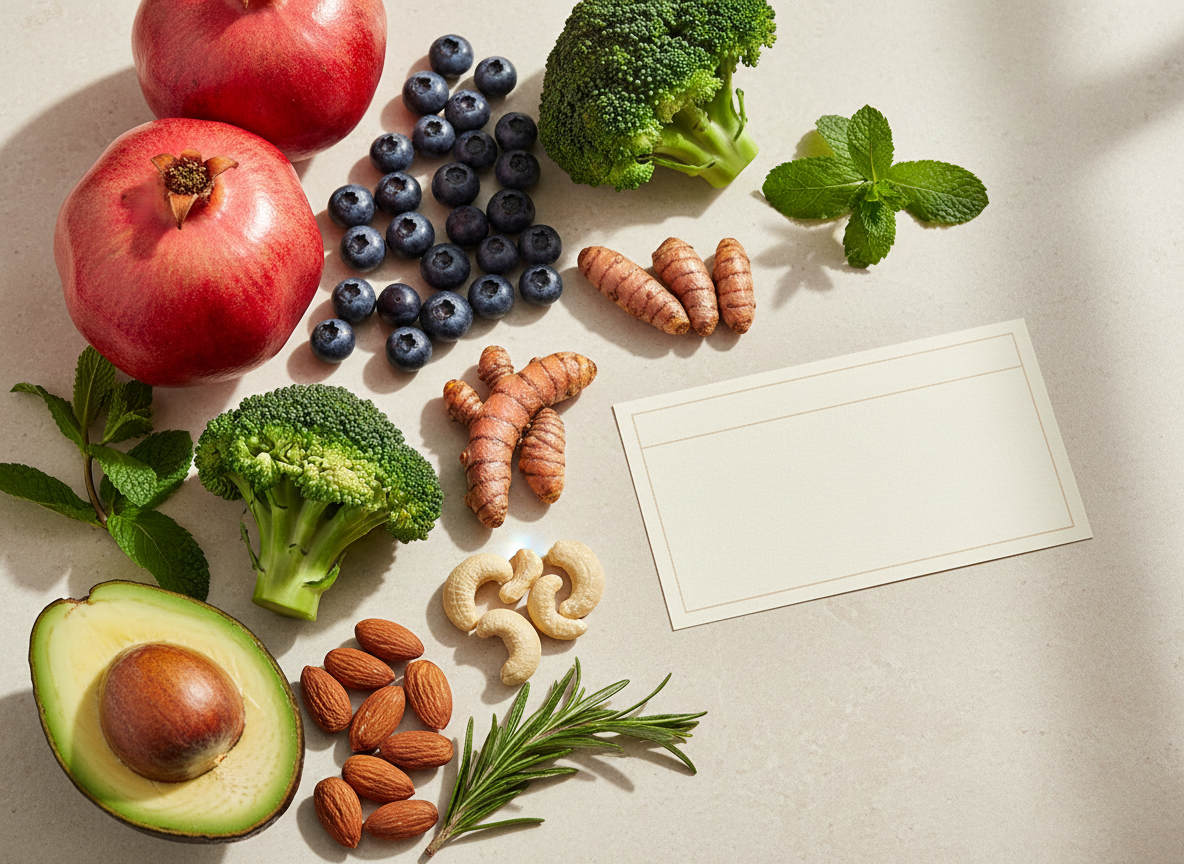
Labels tell a story — once you know a little of the language — and learning to read them is a simple way to align your daily choices with a whole-body framework. Ultra-processed foods are often engineered to override the body’s natural hunger and fullness signals, relying on combinations of refined flours, added sugars, industrial seed oils, artificial flavors, colors, and preservatives. In contrast, the eating patterns seen in long-lived communities are usually simple, based on foods close to their original form and often prepared at home. Prevention-focused educators similarly encourage a shift away from heavily processed, low-fiber eating and toward whole foods that deliver fiber, antioxidants, phytonutrients, and healthy fats. Reading ingredient lists — not just the marketing claims on the front of a package — is one of the most empowering small skills you can build. A useful rule of thumb: if an ingredient list is long and filled with words you cannot picture growing in a garden or raised on a farm, it may be worth looking for a simpler alternative. This principle applies to food, but also to skincare, supplements, and everyday cleaning products.
Progress here does not need to be dramatic or all-at-once. The aim is to gradually shift your daily defaults — what you habitually reach for — toward options that nourish rather than burden your body over time, in alignment with the other areas of this framework. Swap one ultra-processed snack for a piece of fruit, a small handful of nuts, or a boiled egg. Check whether a personal-care staple has a cleaner version at a similar price point. Cook one extra meal at home this week. These micro-improvements are not about perfection; they are about the slow, steady compounding of small, honest choices. If specific health conditions, food allergies, or medical treatments affect your needs, a registered dietitian or your health care team is the right guide — these suggestions form a general, preventative framework, not medical advice. Every small, conscious choice you make for your body and environment is an act of care, and it counts.
Challenge: Pick up one packaged food or personal-care product you buy regularly and read its full ingredient list. Decide whether it still feels like a good fit, or whether you’d like to explore a simpler alternative on your next shop.
A note on this information
The ideas shared across this page are offered for general education and reflection only. They draw on publicly available research, wellness literature, and prevention-focused voices — including research on long-lived communities and educators such as Chris Beat Cancer and the Blue Zones— and are intended to complement, never replace, the personalized guidance of your qualified health professionals. Nothing here constitutes medical advice, diagnosis, or treatment. If you have a health condition, are undergoing treatment, or have specific nutritional or medical needs, please work closely with your health care team to determine what is right for you.

